About the Jain Gallery
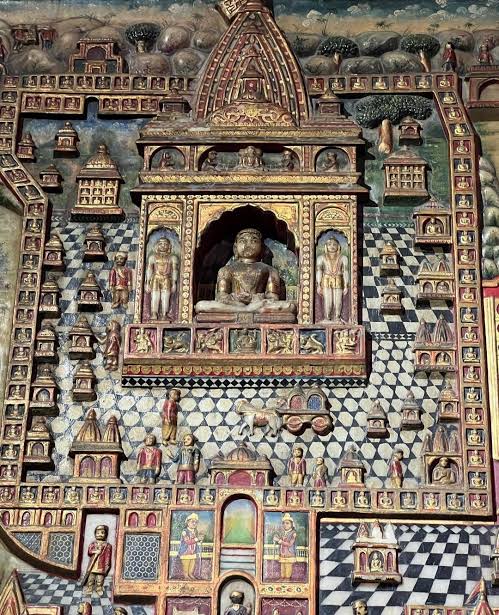
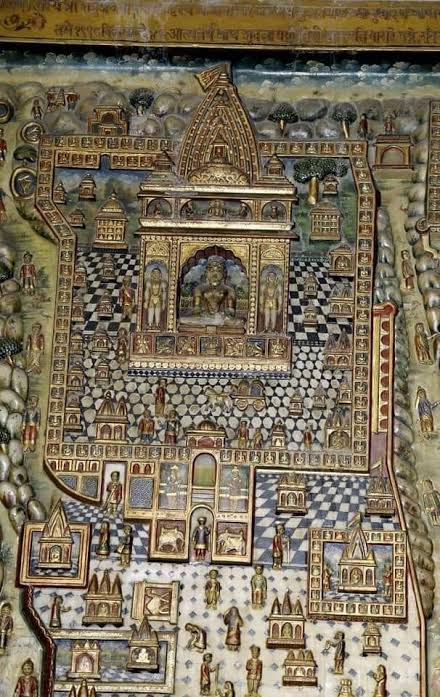
The Jain Gallery is a small, quiet room inside the Lahore Museum, the 19th-century institution on Shahrah-e-Quaid-e-Azam (The Mall) that Lahoris call Ajaib Ghar, the "House of Wonders". Most visitors come for the museum's Gandharan Buddhas and Mughal paintings and walk straight past it. For Jains, especially families whose roots lie in the old Punjab, it is one of the few places in Pakistan where the sacred art of their tradition is still gathered together and on public view.
Echoes of Jain Punjab
Before 1947, Jain communities were an established part of life across the Punjab, in Lahore, Gujranwala, Multan and many smaller towns, and as far south as Nagarparkar in Sindh. They were active in trade, philanthropy and civic affairs. When those communities moved to India at Partition, many temple objects were left behind; some were later salvaged and brought to the museum, where they now rest.
Images of the Tirthankaras
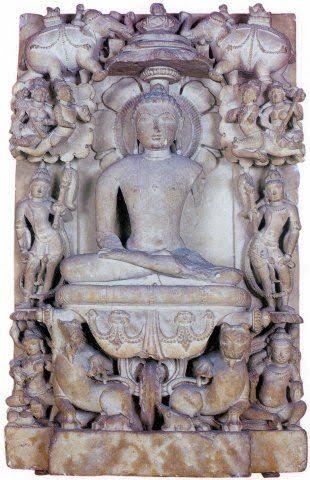
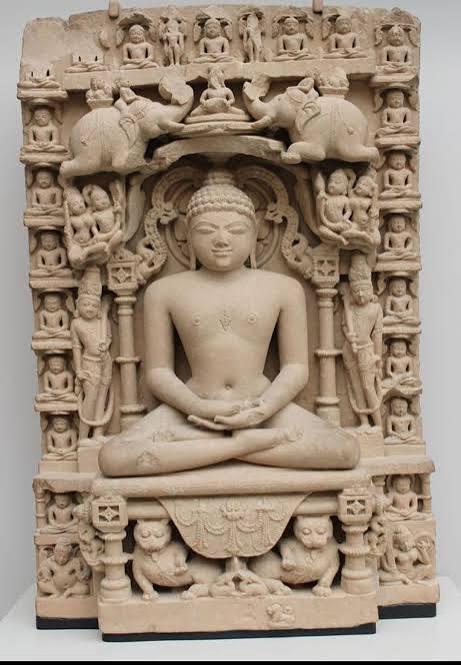
At the heart of the collection are stone and marble images of the Tirthankaras, the 24 liberated teachers of Jainism. Some pieces are believed to date back to around the 10th century; others carry inscriptions from the early 1900s. Visitors can identify each Jina by his lanchhana, the small emblem carved on the pedestal:
- Mahavira, the 24th Tirthankara: the lion
- Neminatha, the 22nd: the conch
- Shantinatha, the 16th: the deer
- Chandraprabhu, the 8th: the crescent moon
- Padmaprabhu, the 6th: the lotus
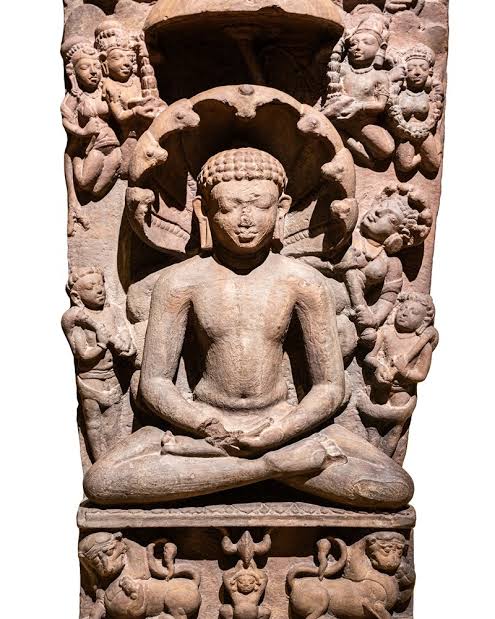
Related objects connected with Parshvanatha, whose head is sheltered by the hood of a serpent, are also part of the holdings. One damaged seated Jina sits on a lion throne with his hands resting in his lap in dhyana mudra, the gesture of meditation. A chaubisi altarpiece, depicting all 24 Tirthankaras together, is a reminder of the shrines where these images were once worshipped every day.
Gujranwala and Shri Atmaramji
Several of the most moving objects come from Gujranwala. The gallery displays a complete wooden Jain shrine, painted and gilded with floral designs and Tirthankara symbols. The museum also preserves a richly carved wooden balcony from the Shvetambara Jain Mandir of Gujranwala, a temple completed in 1941; it was rescued and moved to Lahore in the 1970s.
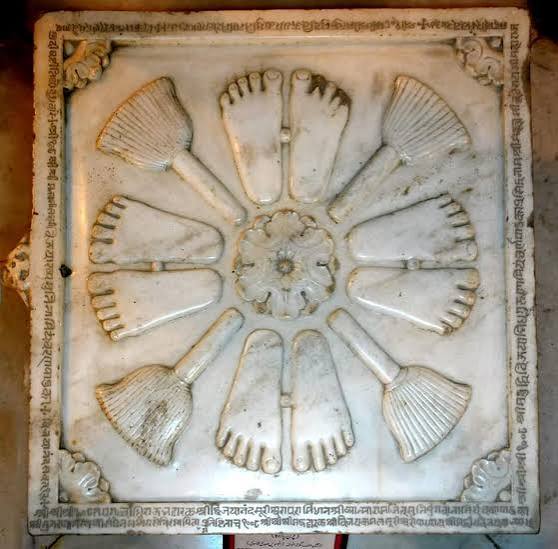
Nearby are 19th-century marble charan (footprints) associated with Shri Atmaramji, honoured by Shvetambara Jains as Acharya Vijayanand Suri (1837–1896). He was one of the great reformers of Jainism in the Punjab, and his samadhi still stands in Gujranwala. A separate white marble slab bears the footprints of four Jain monks.
A network of devotion
Inscriptions on many objects record donations by Oswal merchants and lay followers, some with links to Gujarat. They show how Punjabi Jains were tied to Jain centres across South Asia, a connection that today's Jain diaspora will recognise.
Fresh research and new labels
In 2025, students at the Lahore University of Management Sciences (LUMS) studied every object in a seminar with the museum's permission, examining inscriptions, iconography and provenance records. Their work produced new bilingual labels for the gallery and an online catalogue titled Icons of Devotion.
Visiting
The gallery is inside the Lahore Museum, opposite the Zamzama gun near Anarkali Bazaar. Jain material is shown in two places: this dedicated gallery, and the larger Hindu, Buddhist and Jain gallery. Ask the staff if you can't find it. Please check opening days with the museum before you travel.